

Chris Barta—CHS Welding teacher and Pathway coordinator–started playing Dungeons & Dragons when he was only 9-years-old, right around the time it first debuted in 1974.
Introduced to the game by a friend, Barta was attracted to the aspect of the game where you get to build and create your own characters and their stories.
The fantasy of Dungeons & Dragons was a draw, too. Barta grew up reading comics and magazines. Among his favorites was Conan the Barbarian, the character created and written by Robert E. Howard and popularized in the 1970s by Marvel Comics. He also loved the 1978 animated version of The Lord of the Rings.
Barta explained the popularity of the game. “There’s something about the co-creative nature of this type of tabletop game, where the story is told not only by the actions of the characters that are being controlled by the students, but also the responses that they get from the referee about those actions and interacting with the world that’s being built by the referee. Seeing that interaction is a lot of fun.”
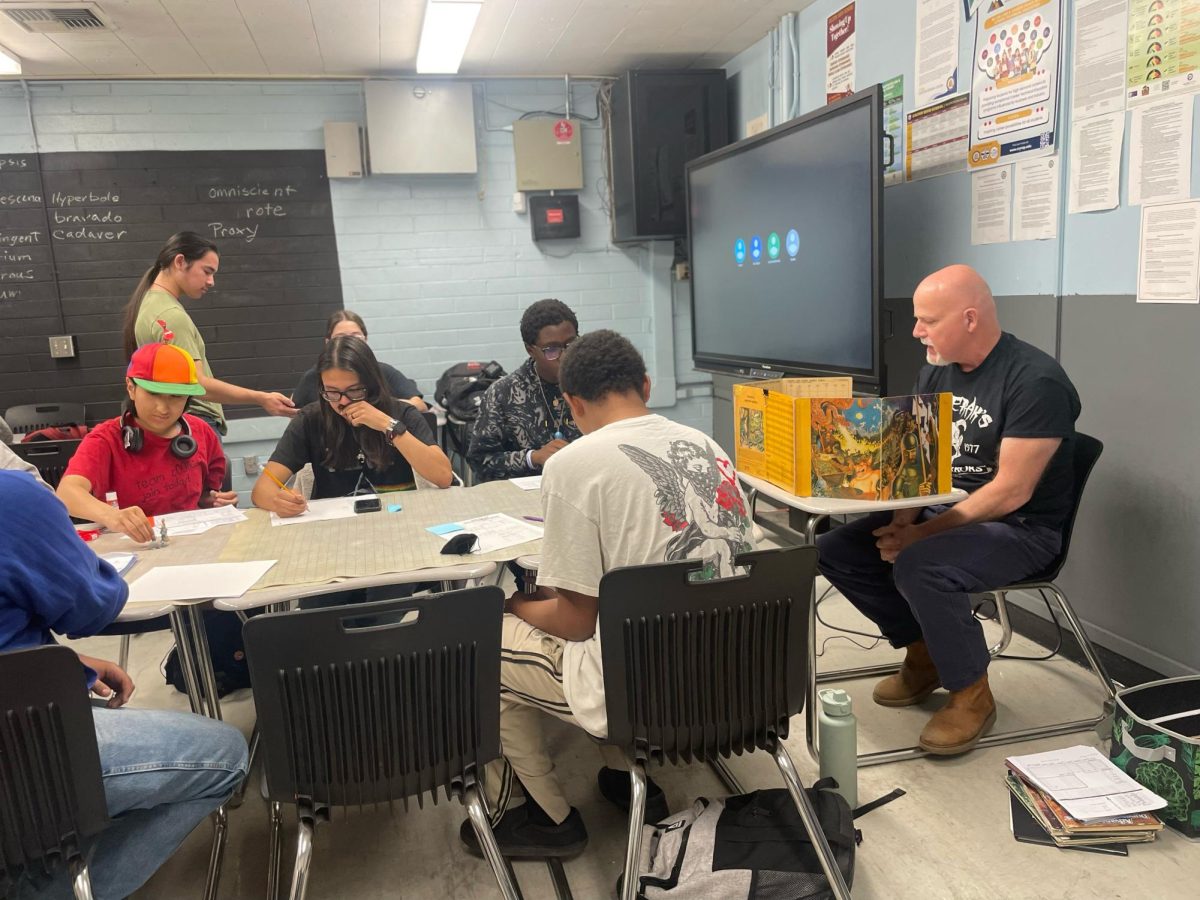
Playing D&D–as it is known by those who play it–has been a part of Barta’s life ever since, and he has been more than happy sharing that passion with students at Colton High as the advisor of the Dungeons & Dragons Club, which started meeting last year.
Every Wednesday after school, Barta opens his classroom to the students who play and share a love for the classic role-playing fantasy game. Many of the students are also involved with the Welding Pathway. He became advisor after being asked if he could host it. It was a perfect fit.
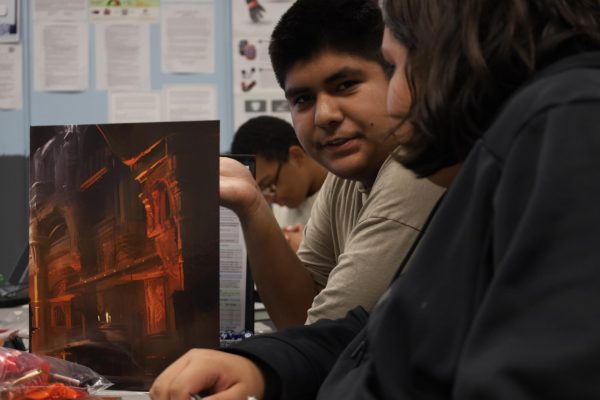
After a successful first campaign last year, this year Barta had an idea to teach the club about the game’s history by introducing them to D&D’s first edition, the one he was raised on. The game is now on its fifth edition, which is what club leaders Jayden Camacho and Erik Cruz Sandoval have been using each week for the club’s adventures.
To teach the history, Barta thought it would be fun to run a campaign using the first edition in between weeks when Cruz and Camacho ran theirs. Barta teaches them the first edition of the game that he grew up playing, then the next week they transition back to the fifth edition.
For the uninitiated, it might seem strange to run multiple games, not to mention recognizing the differences between editions, but D&D has evolved a lot since its release in 1974.
Regardless of the edition, the basic game play of D&D is the same. Participants create their own characters, which can be categorized under several classes (Paladin, Bard, Cleric, Druid, Ranger, Wizard, etc.). The Dungeon Master, or referee, sets up the story, maintains the rules of the game world, and keeps track of participant turns. When a participant gets a turn, they ask questions, go on journeys, or make decisions about what their character will do. When they make decisions, however, they roll a twenty-sided die called a dodechahedron, and based on the strength of the roll, reveal the impact of their decisions on not just themselves, but possibly other players. Participants take turns, furthering the story. Each adventure is called a campaign, and while some campaigns are meant to be short, there are others that can take years to complete.
To understand the basics of the differences between the old and new games, Barta explained, “In the old version of the game it focused on interacting with the world and building that world, whereas the newer version of the game focuses more on building the story of your hero, which is two different ways of looking at it.”
Club member Lexxie Ayala believes the quality of the experience lies with the quality of the Dungeon Master’s storytelling. “It all depends on the dungeon master and how they set everything up. You could have a good game, but not have much of a fun or engaging story. [Barta] does a good job at both.”
Club president Erik Cruz Sandoval finds the experience exciting. “I like it because of the way [Barta] runs an older style campaign. Instead of us doing a story in an open world, we’re actually inside a dungeon and we have to map out the dungeon so we don’t get lost.”
“I love the realism,” said club member Addy Lemos about Barta’s campaigns. “It’s brutal, but still has that realistic feel while giving it its fantasy lifestyle kind of game-ish thing.”
The end result of the campaign, besides having a good time, is about building relationships. Cruz Sandoval feels that this experience has helped him better understand his welding teacher. “What he learned in his childhood kind of connects me to him because I feel we both have a common ground of what we understand and what we’ve done.”
For Barta, sharing his connection with the game deepens his connection with his students, which emphasizes the importance of the game, and the key to its 50-plus years of popularity: building relationships through the power of imagination.